

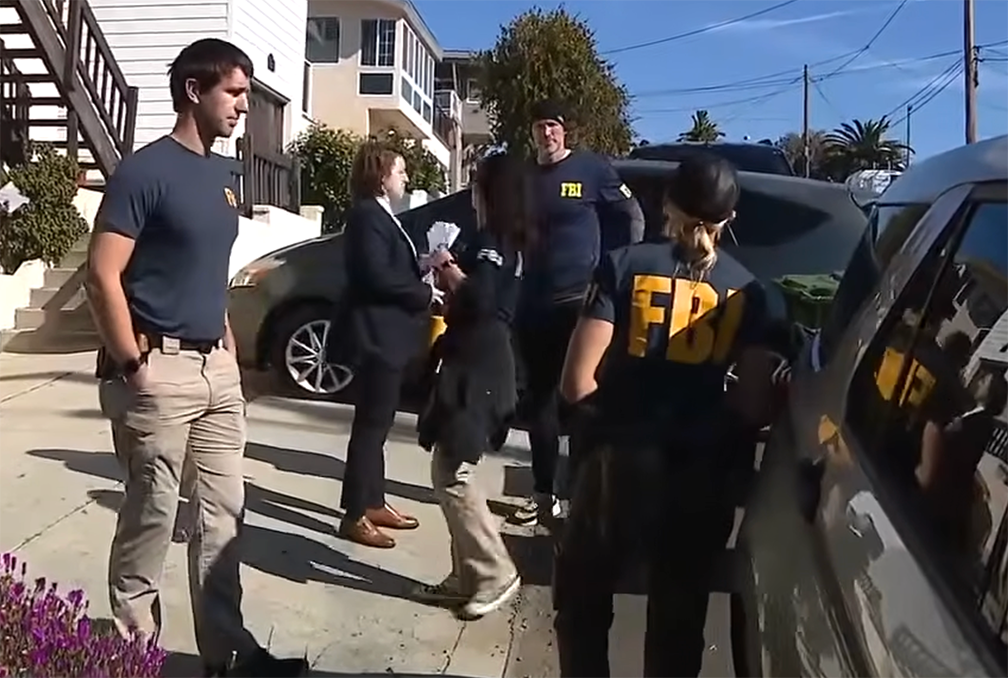
On Wednesday morning, federal authorities came through Los Angeles like a warning siren with a battering ram.
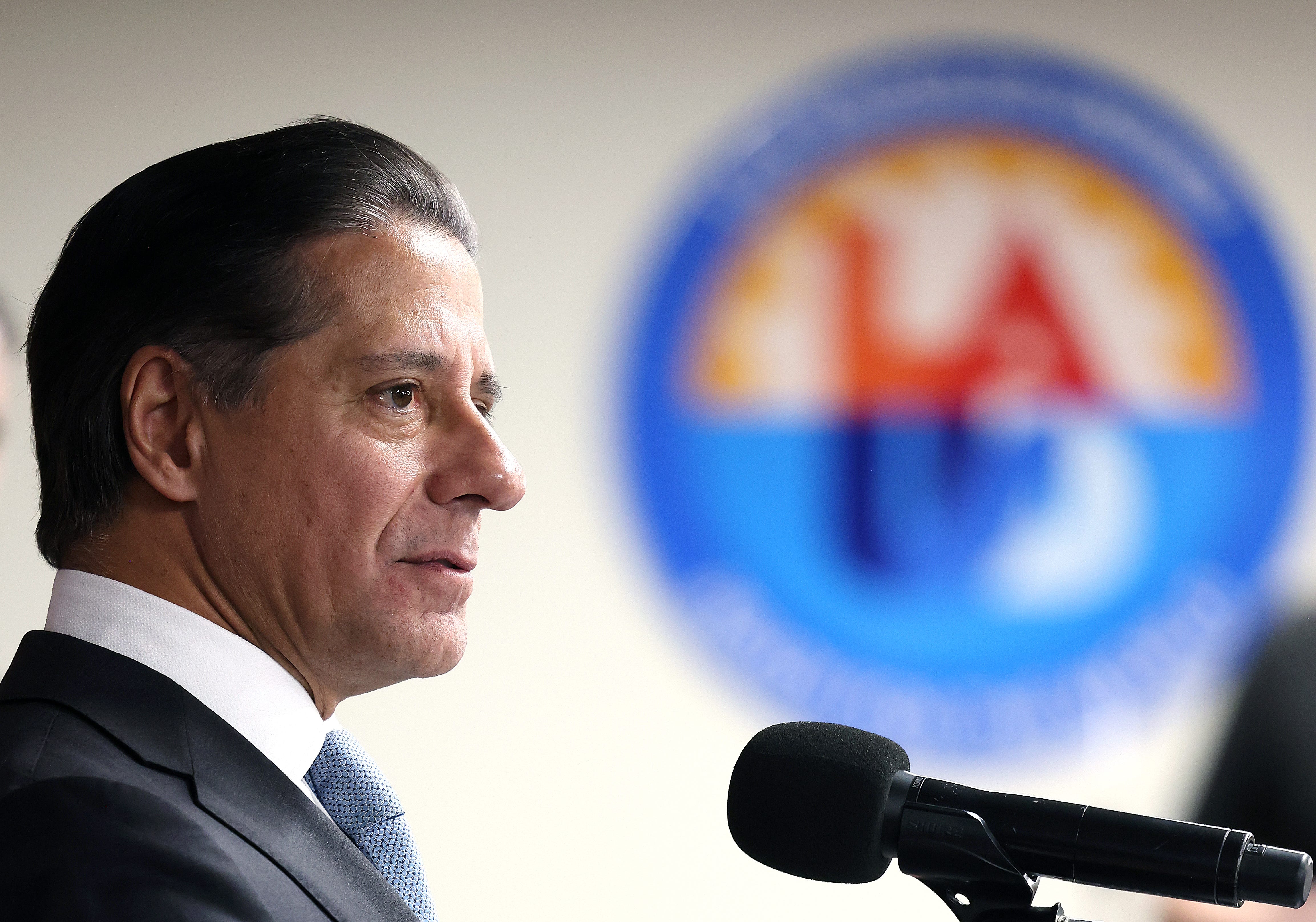
They raided the home and office of Los Angeles Unified School District Superintendent Alberto Carvalho. Officially, this falls under an investigation tied to a company that developed an AI chatbot for the country's second-largest school system. That is the paper story. Reality is different.
The three raids were painted as three points of pressure: Carvalho’s home in San Pedro, LAUSD headquarters downtown, and a residence associated with Debra Kerr, a saleswoman whose clients included a Florida-based artificial intelligence company called AllHere.
The AllHere chatbot, the collapse, and the official rationale
AllHere was a failed artificial intelligence company whose founder was charged with fraud in 2024. Joanna Smith-Griffin, founder and former CEO, was arrested that year and charged with securities fraud, wire fraud, and aggravated identity theft. By the time those charges landed, the LAUSD chatbot had already been taken out of service.
The tool had a name: “Ed.”
Carvalho introduced “Ed” in August 2024 as revolutionary for student education and as a new channel between LAUSD and the families it serves. The tool never fully launched. It never became the future. It became a problem, and then it disappeared.
The indictment and the collapse of AllHere embarrassed Carvalho and the school system, but it did not appear to be a catastrophe on the balance sheet. LAUSD spent about $3 million with the company for work done under a contract originally worth up to $6 million over five years. LAUSD’s budget this year is $18.8 billion. In dollar terms, this was not the kind of figure that usually triggers a federal spectacle.
A former AllHere executive has accused the now-bankrupt company of inadequate security measures. Even if that accusation holds, there is no evidence of a security breach affecting student or employee data.
AllHere also held a contract for somewhat different services with Miami-Dade County Public Schools, which Carvalho ran before joining LAUSD. He has said he had nothing to do with that contract. He has also denied personal involvement in selecting AllHere for the Los Angeles project.
When the accusations surfaced, Carvalho said he would appoint a task force to examine what went wrong with the LAUSD project and chart a way forward. There is no evidence that he has done so.
Debra Kerr, the commission dispute, and the relationships around the deal
Debra Kerr rapidly becomes the connective tissue.
She is a successful consultant to companies seeking to work with school districts, and she has a long relationship with Carvalho dating back to his time as superintendent in Miami. She worked as a consultant for AllHere. In court documents, she has claimed the company owes her $630,000.
Her claim: AllHere never paid her the commission she says she was owed for closing the Los Angeles AllHere deal.
Carvalho’s standing in LA, and the earlier scrutiny in Miami
Carvalho has not floated through his career unnoticed. LAUSD hired him in February 2022. The school board renewed him in September. In September 2025, the Los Angeles Board of Education voted unanimously to keep him on for another four years, at an annual salary of $440,000. Board President Scott Schmerelson said at the time that the superintendent “has demonstrated consistent leadership in difficult times.”
Before Los Angeles, Carvalho spent 14 years leading Miami-Dade County Public Schools. His biography on the district’s website lists an array of honors, including National Superintendent of the Year in 2014 and National Urban Superintendent of the Year in 2018.
But there is history here, too. In 2020, Carvalho came under scrutiny from the Miami-Dade school system’s inspector general. He had helped solicit a $1.57 million donation from an online education company for a foundation he oversees while the company had a pending contract with the district. Once hired, the company delivered an online platform riddled with problems and quickly scrapped it, according to the Miami Herald.
In June 2021, the inspector general concluded the donation, intended to benefit teachers, did not violate state or district ethics policies but created “an appearance of impropriety,” and that the foundation Carvalho created should return the funds. Instead, the foundation distributed the money in $100 gift certificates to teachers.
The federal lawsuit, the Justice Department’s intervention, and what changed the temperature
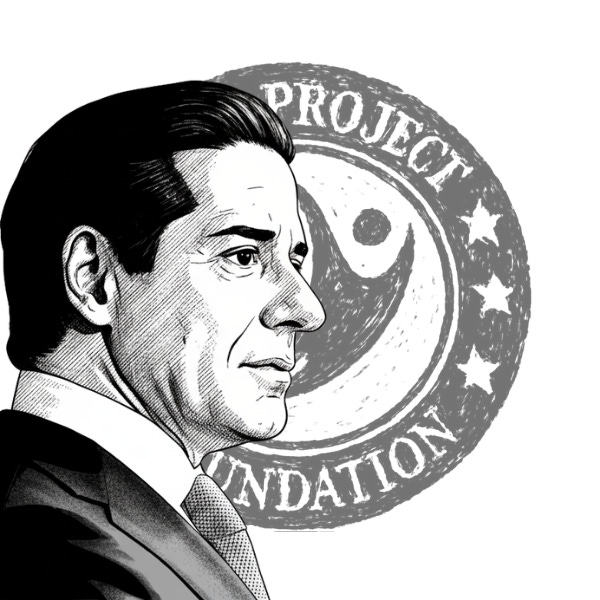
If this were only a chatbot story, it would be just that. But last week, the Trump administration joined a lawsuit filed by the 1776 Project Foundation, a conservative group based in Billings, Montana, alleging that LAUSD “discriminates against white students” under its decades-old desegregation policy.
Filed last month in federal court in Los Angeles, the lawsuit alleges LAUSD’s allegedly racially discriminatory policies “systematically disadvantage certain students based on the racial composition of their schools.”
The suit argues LAUSD used race-based classifications to label schools as “PHBAO,” or “predominantly Hispanic, Black, Asian, and other non-Anglo,” and allocated benefits accordingly.
Fewer than 100 schools in the district lack the PHBAO designation. The lawsuit alleges that students in those schools, including white and Middle Eastern students, are denied equal access to educational resources and opportunities.
Then the Justice Department walked in. In its motion to intervene, it contends that LAUSD provides additional funding to PHBAO schools to reduce the student-to-teacher ratio by 5.5 students and increase parent-teacher conferences. It also alleges that LAUSD gives students who wish to transfer to a magnet program admission preference equal to that of an overcrowded school, and that LAUSD treats attendance at a non-white school as a disadvantage equivalent to that of an overcrowded school.
The case is framed as a civil rights case. It is also, plainly, a political weapon aimed at the spine of desegregation policy.
The April school incident, immigration enforcement, and why this is not isolated
And then there is the part that makes the timeline feel like retaliation with paperwork.
In April of last year, Carvalho denied federal immigration agents entry to two elementary schools. On Monday, April 11, several federal agents visited Lillian Street Elementary School and Russell Elementary School within two hours of each other.
“They wanted access to the students, to determine their well-being based on, according to the agents, the fact that when they entered this country, they entered as unaccompanied minors,” Carvalho said. “It is well-known that these students are under the care of relatives.”
Now, under the pretext of investigating the AI chatbot, the government wants to try to silence Carvalho, who is not only an idol in the education system but has also been an outspoken critic of the administration.
Down the Rabbit Hole: Who is behind the 1776 Project Foundation?
The 1776 Project PAC, which is behind the lawsuit, is a conservative organization focused on electing school board members, founded by Ryan James Girdusky in 2021. The group aims to counter critical race theory and promote “patriotic education” in public schools. Conservative donors, including billionaire Richard Uihlein, heavily fund it.
According to a 2025 PR release, the organization behind the 1776 Foundation called it “the NRA of conservative education.” Girdusky is the founder of the 1776 Project PAC, which supports conservatives running for school board elections. The PAC has supported more than 350 races and won more than 200 school board seats across the country.
Girdusky is not a fringe amateur. He is a political consultant who has advised campaigns for Senator JD Vance and Representative Thomas Massie, among others. He is also the author of They’re Not Listening: How the Elites Created the Nationalist Populist Revolution.
In his “letter from our chairman” on the organization’s website, he writes:
“I first became involved in education as an issue after an incident at my godson’s school. His teacher read the books Race Cars and Something Happened In Our Town: A Child’s Story About Racial Injustice to his fourth-grade class, followed by a lecture about how police were racist.”
He then accuses: “Progressive activists within our public education system were using their positions to indoctrinate children. Even conservative communities in red states were not immune to this growing epidemic.”
“The truth is that public education in its current state is failing millions of American children. Even if there wasn’t a single culture war issue in our public schools, millions of children are behind in reading and math proficiency, parents and teachers fear for their safety inside schools, and school districts across the country have begun moving away from ideas like colorblindness and merit and instead embracing soft segregation and telling children their identity matters more than their ability.”
Get the idea?
The money behind it: Richard Uihlein
Just as every movement has its language, every movement has its donors. The organization's biggest donor is Richard Uihlein.
Uihlein has been a Republican donor for decades and increased his political giving after Citizens United v. Federal Election Commission. He is a longtime donor to Republicans who share his ultra-conservative views. He is a staunch social and economic conservative with views that are anti-union, anti-tax, and pro-deregulation.
He has supported far-right candidates and often supported efforts opposing gay and transgender rights as well as abortion rights. He has been described as someone who “shuns the spotlight.” He rarely gives interviews.
This is the kind of donor profile that funds palpable outcomes.
So what is really behind Carvalho?
The justice system must investigate any wrongdoing involving the AI company and any other wrongdoing. That is not optional, and it should not be negotiable.
But set the pieces on the table and the picture sharpens. It may be about the chatbot. It may be about procurement. It may be about a trail of emails, contracts, and signatures.
But the force behind this moment looks like something else, too: the multi-million-dollar far-right machinery moving through courts and federal agencies to attack public education and to target the people who stand in its way, especially when those structures attempt to serve students of all races.