



While the U.S. president plays tin soldiers with Israel in Iran, back at home, people are scratching their heads and looking for alternatives just to afford healthcare.
And it is all part of the same protocol: disenfranchise less affluent communities while the 1% gets richer and richer.
A rise in healthcare costs has been anticipated for months
According to CNN, millions of Americans received an unpleasant reminder in January of how expensive healthcare coverage is. Workers enrolled in Obamacare and Medicare learned of steeper-than-usual increases in their health insurance premiums for 2026.
This year, employers’ healthcare costs are expected to rise by 9%, the largest increase in several years, the outlet reported. Consultants say employers will try to soften the blow to workers, at least to some extent. Premiums for the Affordable Care Act’s benchmark plan shot up 26% on average, one of the largest increases since Obamacare plans were first introduced more than a decade ago.

According to a health policy research group, enrollees' actual premium payments are expected to skyrocket by an average of 114% due to the expiration of enhanced federal subsidies.
And Medicare Part B premiums, which cover doctor visits, outpatient hospital services, and other care, shot up nearly 10% this year. That is the largest increase in four years and the second largest increase, in monetary terms, in the program’s history. The standard monthly premium is now $202.90, up $17.90 from last year, according to the Centers for Medicare and Medicaid Services.
Why is this happening?
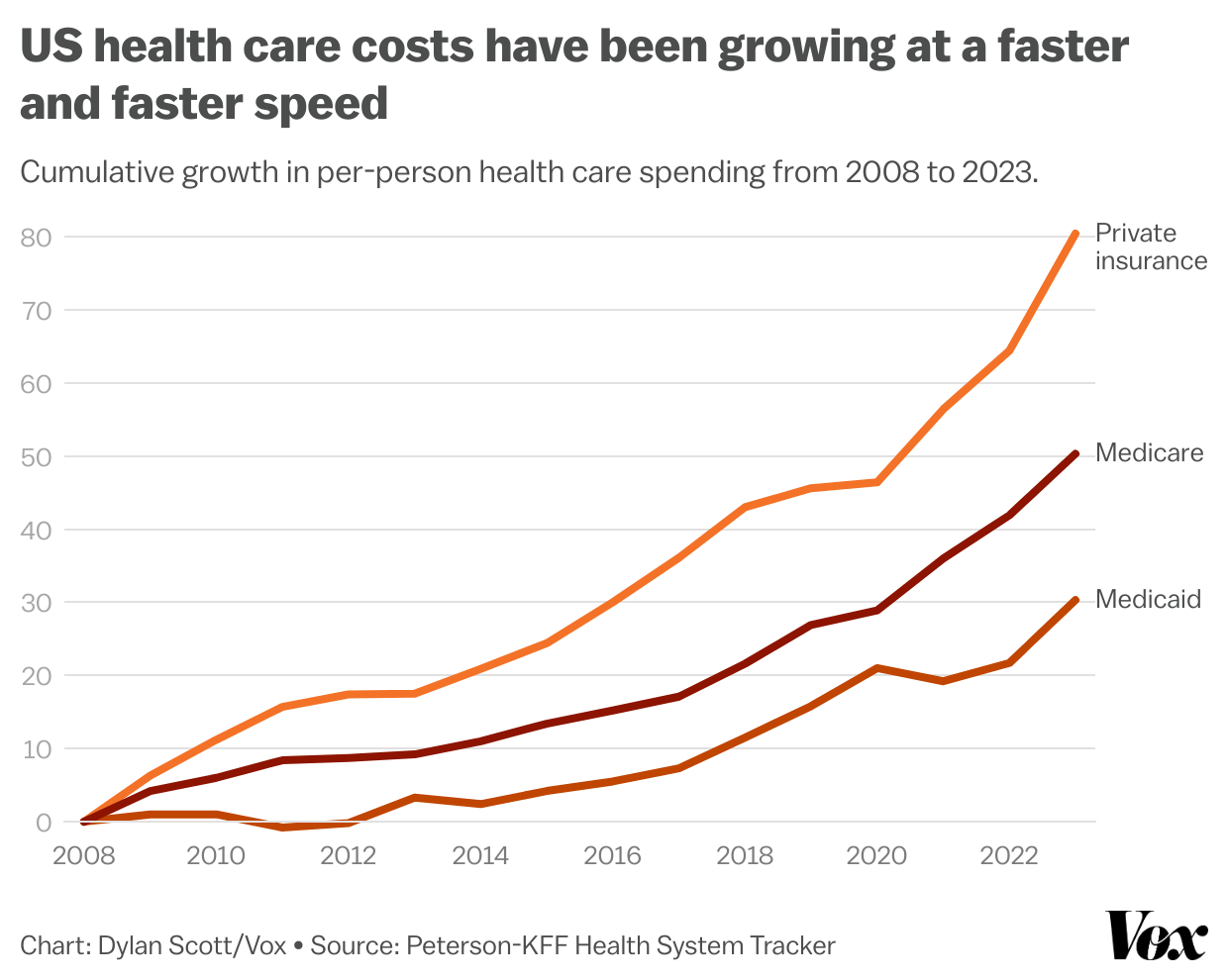
CNN reported that while the employer market, Medicare, and the Affordable Care Act each have their own specific reasons for premium increases, many common factors are driving up monthly bills for policyholders.
One of the main reasons is that Americans have been seeing doctors more often in recent years and, in some cases, receiving more intensive treatments.
This increase in utilization is partly due to people postponing medical care during the pandemic, which has led to some diseases being diagnosed at more advanced stages in some patients, according to experts.
In addition, the growth of medical clinics and telehealth providers has made it easier to access health services, according to Sunit Patel, chief health and benefits actuary at Mercer in the United States. There is also a growing range of providers, such as physician assistants, treating patients.
Like insurers, hospitals have also merged and absorbed other medical service providers, including doctors’ offices, outpatient centers, and laboratories. According to KFF, by 2023, hospital care in nearly half of metropolitan areas was controlled by one or two health systems.
And by 2024, 55% of physicians were employed by hospitals.
Hospital consolidation has led to higher prices, while hospital acquisitions of medical practices also tend to drive up costs, according to a 2022 RAND study.
Meanwhile, the government prefers to give money to ICE
As reported by the ACLU in August of last year, Congress voted to cut Medicaid and “defund” Planned Parenthood to finance the president’s anti-immigrant agenda.
Early last summer, Congress passed the most damaging budget in a generation. H.R. 1, or the “One Big Beautiful Bill Act,” made the largest cut to Medicaid since its creation in the 1960s and allocated that money to fund President Donald Trump’s racist and anti-immigrant agenda.
As the ACLU explained, instead of strengthening Medicaid, Congress slashed it. Instead of curbing the abuses of Immigration and Customs Enforcement (ICE), Congress gave the agency billions more to terrorize our communities and detain families.
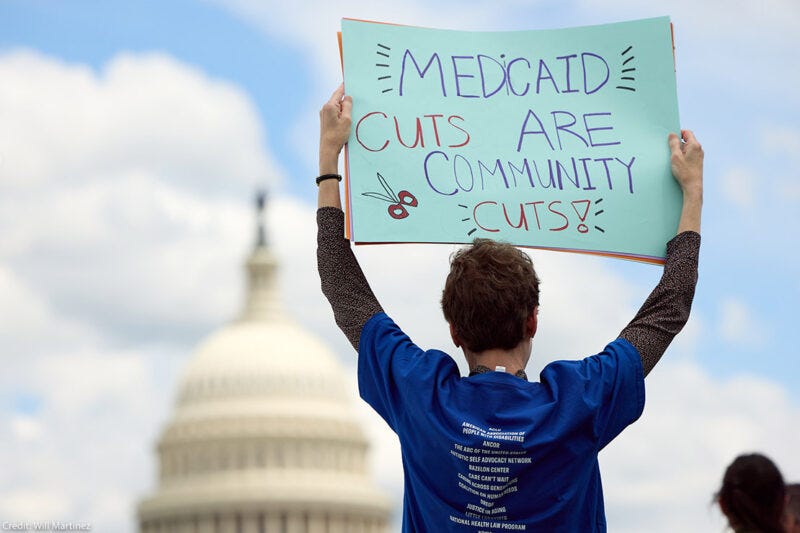
“Medicaid is a critical resource across the country, especially for children and people with disabilities. Politicians’ vote to cut Medicaid, a program that provides coverage for an estimated 70 million patients, means that in every single state and congressional district, people are closer to rationing medication, missing essential medical treatments, and losing access to the care they need,” the ACLU wrote.
“Unsurprisingly, the most vulnerable among us will feel the brunt, including 12 million people with disabilities who rely on Medicaid. Medicaid coverage is a linchpin to ensure people can exercise their right to live in their own homes, rather than dehumanizing institutions. Denying these supports and care forces people into institutions, stripping them of the liberty and autonomy our Constitution protects.”
The outlook does not look like it will improve
According to Patrick Aguilar, managing director of health at Washington University in St. Louis, the “Great Healthcare Plan” announced by the administration in January does not appear to solve anything.
Aguilar argues that U.S. healthcare remains the most expensive in the world because it operates within a deeply complex system shaped by competing financial incentives, political constraints, and behavioral responses from drugmakers, insurers, hospitals, and patients.
Prescription drug prices stay high due to costly and risky research and development, patent protections and extensions, and the role of pharmacy benefit managers whose rebate-driven model can incentivize higher list prices. Proposals such as most-favored-nation pricing may lower costs in the short term, but they risk reducing innovation or raising prices abroad.
Efforts to increase price transparency have produced mixed results, as hospitals often fail to comply or adjust prices strategically, and patients still struggle to understand the true costs.
Insurance premiums continue to rise because they reflect overall healthcare spending and depend on maintaining a broad risk pool. When subsidies expire, and healthier people drop coverage, premiums climb further.
Ultimately, Aguilar concludes that reform is difficult because each intervention triggers counter moves within a fragmented system, making cost control politically and economically challenging.
But challenging for whom?
Better yet. Where is all the money going? It doesn't seem to be going towards providing healthcare. 75 years ago 5% of the GDP was healthcare, now it's 20%. With all that money moving around in the economy why is the average life expectancy decreasing? why are infant death rates up? Why our people losing coverage? Hmmm. Are we optimizing the mission of healthcare or industry profits? Perhaps we need to change the incentives to caring for people.