


For years, Donald Trump and his team have campaigned on the slogan “America First,” claiming that mass deportations of immigrants would lead to “higher wages with better benefits” and a “100% American workforce.” What they did not realize, among many other things, is that immigrants are the backbone of the American workforce.
In 2025 alone, more than 15,000 farms closed in the U.S. According to USDA data released in February 2026, the number of U.S. farms fell to a total of 1.865 million. This is due in part to a severe economic downturn, along with all the other factors the administration has promoted as a hoax: climate change, declining export demand, and, of course, the importance of farmworkers.
Now, according to The New York Times, the agricultural sector is facing a tight labor market as “farmworkers age and fewer new immigrants and younger Americans are willing to toil in the fields.”
Without saying so outright, the administration has admitted in recent months that immigration raids and the crackdown at the border “have exacerbated the issue.” Their solution? Making it cheaper for farmers to hire immigrant farmworkers on temporary visas.
As the Times reported, although many farmers have welcomed the changes made to the H-2A visa program, others are more radical in their opposition. Either way, “the simmering debate underscores how some of the administration’s top goals — reducing immigration, keeping food prices low, and helping American workers — may inevitably conflict.”
And it seems the administration still doesn’t get it
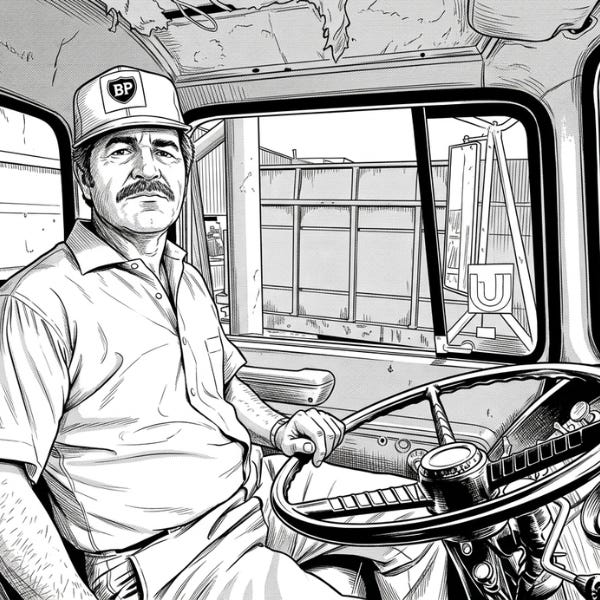
As if the lesson about the importance of immigrants to the country’s economic engine had not sunk in, some 200,000 immigrant truck drivers will now “begin to lose their commercial driver’s licenses as they expire” under a new Trump administration rule that takes effect Monday.
As reported by NPR, the administration’s rationale for tightening the rules is “following several high-profile crashes involving foreign-born drivers.” The policy, aimed at strengthening safety and enforcement, affects asylum seekers, refugees, and DACA recipients.
“To be clear, states are already barred from issuing commercial driver’s licenses to anyone in the U.S. illegally,” NPR added. “Immigrants with temporary legal status do need work authorization from the federal government in order to qualify for a CDL.”
As of early 2026, approximately 200,000 to more than 720,000 truck drivers in the U.S. are immigrants, with estimates often placing the foreign-born workforce at around 18% to 20% of all drivers. However, a new federal rule in March 2026 banning asylum seekers, refugees, and DACA recipients from obtaining or renewing commercial driver’s licenses is directly affecting about 200,000 of these drivers.
Foreign-born drivers are heavily involved in long-haul and regional freight, helping fill labor shortages
The administration’s new rule is expected to exacerbate driver shortages, increase shipping costs, and raise consumer prices.
As the industry relies heavily on foreign-born labor, companies are already reporting immediate difficulties finding drivers for key routes. That translates into increased shipping costs caused by reduced capacity, which are eventually passed on to consumers.
To be more specific, with foreign-born drivers making up a significant portion of the workforce, removing 200,000 drivers is expected to intensify the current labor shortage, which was already estimated at more than 60,000 drivers.
In California, specifically, the regulations are expected to disrupt the transportation economy, with concerns about the potential loss of 61,000 drivers, according to CalMatters.
Finally, the increased scrutiny has caused fear among immigrant drivers, prompting some to avoid certain routes and potentially leading to further supply chain slowdowns.
So what happens when ideology collides with reality?
In the end, as is highly likely, the government will realize that it has no other workforce as efficient and reliable as the immigrant workforce. Will it regret this decision, just as it did with farmworkers, or will it let the economy collapse while searching for another scapegoat that better suits its rhetoric?