


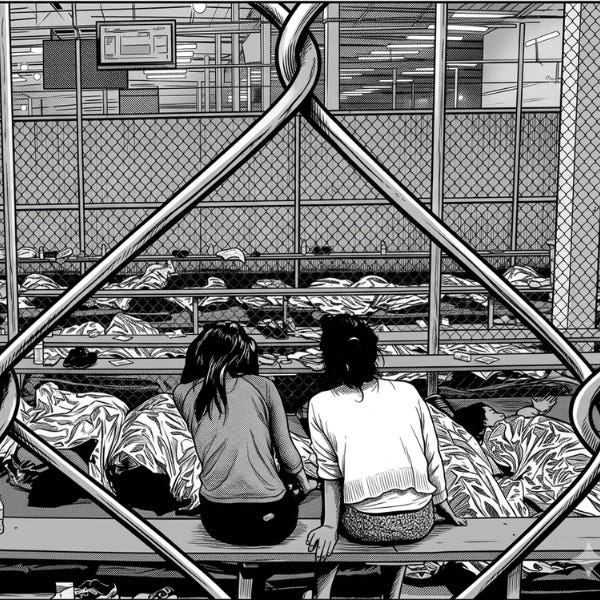
One of the main reasons millions of women make the forced journey to cross the border, or migrate in general, is to escape sexual violence. However, under the Trump administration, the hell that awaits hundreds of immigrant girls is almost as horrific.
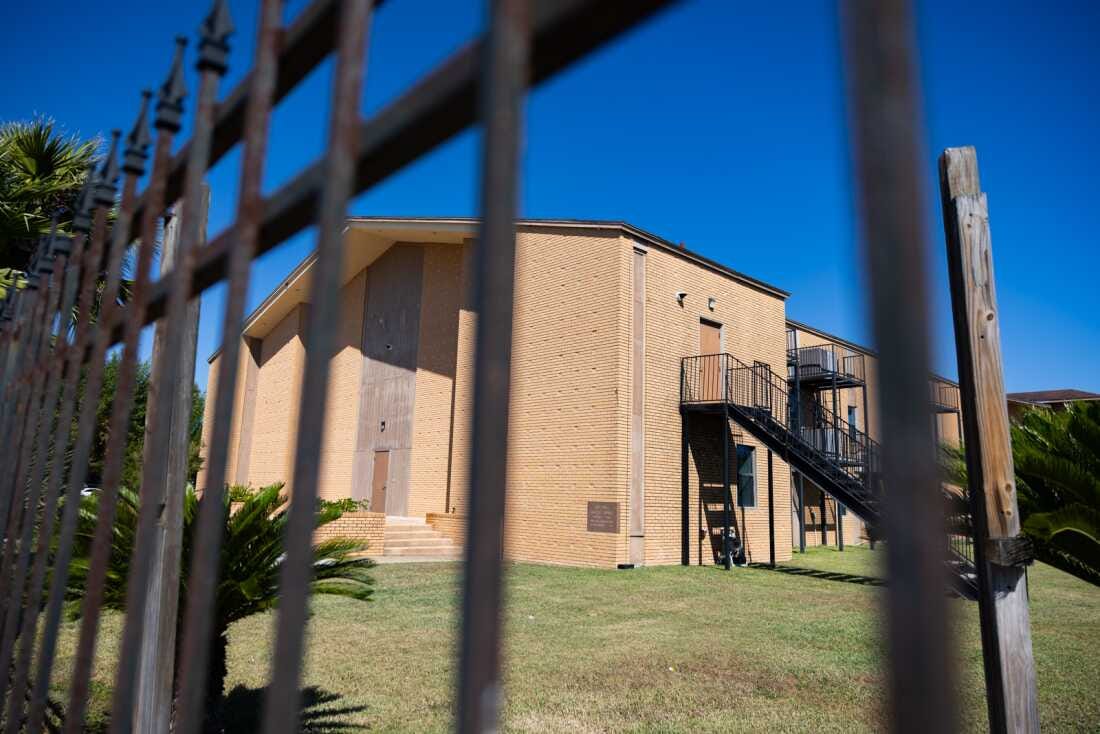
According to a joint investigation by Texas Newsroom and California Newsroom, since July of last year, more than a dozen unaccompanied immigrant minors who are pregnant have been transferred to a single detention centre in the small town of San Benito, near the southern border of Texas.
According to the investigation, the girls being held are as young as 13, and about half are pregnant as a result of rape.
And yet, what sits in the fine print is familiar: Project 2025.
First, why is the government transferring the girls to Texas?
According to The Guardian, the government is transferring unaccompanied immigrant minors who are pregnant to Texas to avoid providing them with abortion services, which activists, former officials, and observers say violates human rights.
Because detainees often move quickly to other states, frequently Republican states such as Texas, pregnant women face steep barriers to reproductive health care in detention centres.
“It’s a choice to ensure zero abortions,” said Jonathan White, a former top official working with children’s programmes in the ORR under the Obama and Trump administrations. When a pregnant child is moved to Texas, “as long as she is in Texas, she can’t access an abortion, without a federal official needing to deny her an abortion,” he said.
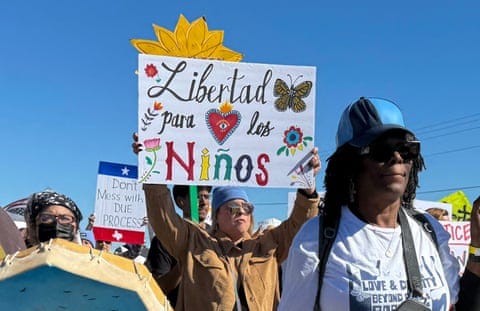
But the transfers sit inside a broader pattern.
For months, complaints about inadequate health care in detention centres have grown louder. Those concerns include the lack of care for pregnant people, the separation of nursing parents and babies, and even forced sterilisation.
The “total disregard” for the rights of pregnant and nursing detainees is a “dramatic violation” of international law and public health practices that ensure consensual medical treatment, said Diana Romero, professor and director of the Center on Immigrant, Refugee, and Global Health at the CUNY Graduate School of Public Health, to The Guardian.
Forcing any individual to carry a pregnancy to term is an “egregious” violation of rights, and relocation from other locations around the country to states with more restrictive abortion laws “adds a whole other layer of concern,” Romero said.
White added that “making the decision for these girls whether they will give birth to their rapist’s baby” is “an extraordinary human rights problem.”
“Everyone attempts to write their politics on the bodies of these children,” he said.
“One high-risk pregnancy away from catastrophe.”
Officials from the Office of Refugee Resettlement (ORR) first raised alarms about the transfers. ORR officials said they never received an explanation for why the government was concentrating pregnant girls in one place, let alone this particular shelter in Texas. Still, they, along with more than a dozen former government officials, health professionals, migrant advocates, and civil rights lawyers, fear the Trump administration is deliberately endangering the girls to promote an ideological goal: denying them access to abortion by placing them in a state where it is virtually banned.
The officials told NPR that “they worry the shelter is only one high-risk pregnancy away from catastrophe.”
“I feel like we’re just waiting for something terrible to happen,” one of the officials said.
Since the July order, none of the pregnant girls at the San Benito centre have had serious medical problems, according to ORR officials and Aimee Korolev, deputy director of ProBAR. This organisation provides legal services to children there. They say several of the girls have given birth and are being held with their babies.
“It’s not good to be a pregnant person in Texas, no matter who you are,” said Annie Leone, a nurse midwife who recently spent five years caring for pregnant and postpartum migrant women and girls at a large family shelter not far from San Benito. “So, to put pregnant migrant kids in Texas, and then in one of the worst health care regions of Texas, is not good at all.”
As NPR explained, specialised obstetric care in Texas is mainly found in larger cities, hours away from San Benito. In addition, several factors, including the high number of patients without health insurance, have reduced the availability of health care throughout the state.
Maternal health experts warned that the potential dangers for the girls at the San Benito shelter include an ectopic pregnancy, in which the fertilised egg implants outside the uterus. They also pointed to miscarriage, or water breaking too early, followed by infection. In those scenarios, they said, the emergency care a girl needs could be delayed or denied by doctors wary of the abortion ban.
Obtaining the available care could take too long to save her life or that of the baby, they added.
Where does Project 2025 come in?
As NPR explained, even before Trump won reelection, policymakers in his circle were planning a new attempt to restrict the abortion rights of unaccompanied minors.
Project 2025, the Heritage Foundation’s plan for politically conservative reform of the federal government, called on the ORR to stop facilitating abortions for minors in its care. The plan advised the government not to detain unaccompanied minors in states where abortion is legal.
According to Project 2025, this change is now possible because the Roe v. Wade ruling is no longer an obstacle. Since the Supreme Court overturned the landmark decision in 2022, there is no longer a federal right to abortion.
Upon returning to office, Trump signed an executive order “to end the forced use of Federal taxpayer dollars to fund or promote elective abortion.”