


The definition of democracy, in the strictest sense, is the granting of the right to have a say to the people. This entails electing their representatives and the opportunity to shape the constitution. It does not, however, mean that voters’ wishes are always carried out, but it does guarantee their right to express those wishes.
That fundamental right is officially at risk in the United States.
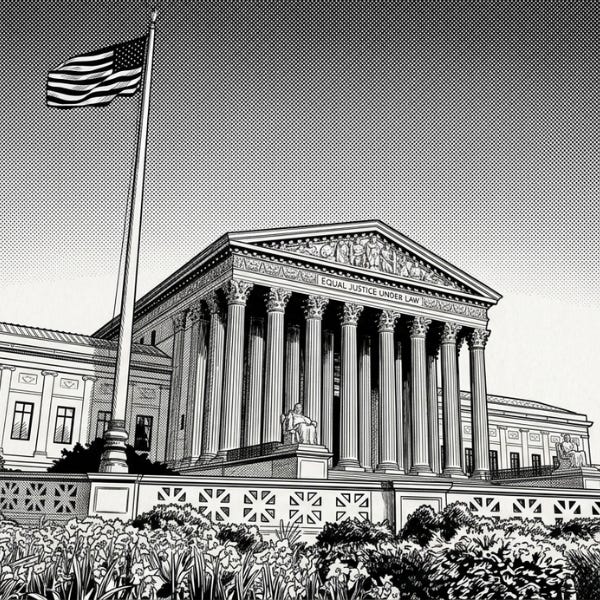
In a 6-3 ruling last Wednesday, the Supreme Court significantly restricted a key provision of the Voting Rights Act.
Since the Civil Rights Movement, Section 2 of the law has broadly prohibited voting discrimination based on race. The provision requires the use of race-conscious data in redistricting to protect minorities’ voting power.
However, in a conservative-majority court, the use of race in the redistricting process has been called into question.
The Court’s ruling on Louisiana.
Wednesday’s ruling came in a case involving Louisiana’s redistricting. The case reached the Court after the state created a district that elected its second Black representative to Congress. The Court’s decision held that the map constituted unconstitutional gerrymandering because it took race into account when drawing the lines.
In an opinion written by Justice Samuel Alito, the Court’s conservative majority held that the Voting Rights Act provision in question, Section 2, was designed to protect voters from intentional discrimination.
In other words, after achieving a redistricting plan that provided fair representation to a community where one-third of the population is Black, the state is arguing that race cannot be used to determine the representation of its voters, using the argument of civil rights against the community itself.
“It means that you have entire communities that can go without having representation,” said Cliff Albright, a co-founder of the group Black Voters Matter. “It is literally throwing us back to the Jim Crow era unapologetically, and that’s not an exaggeration.”
And it isn’t.
An ‘insurmountable barrier.’
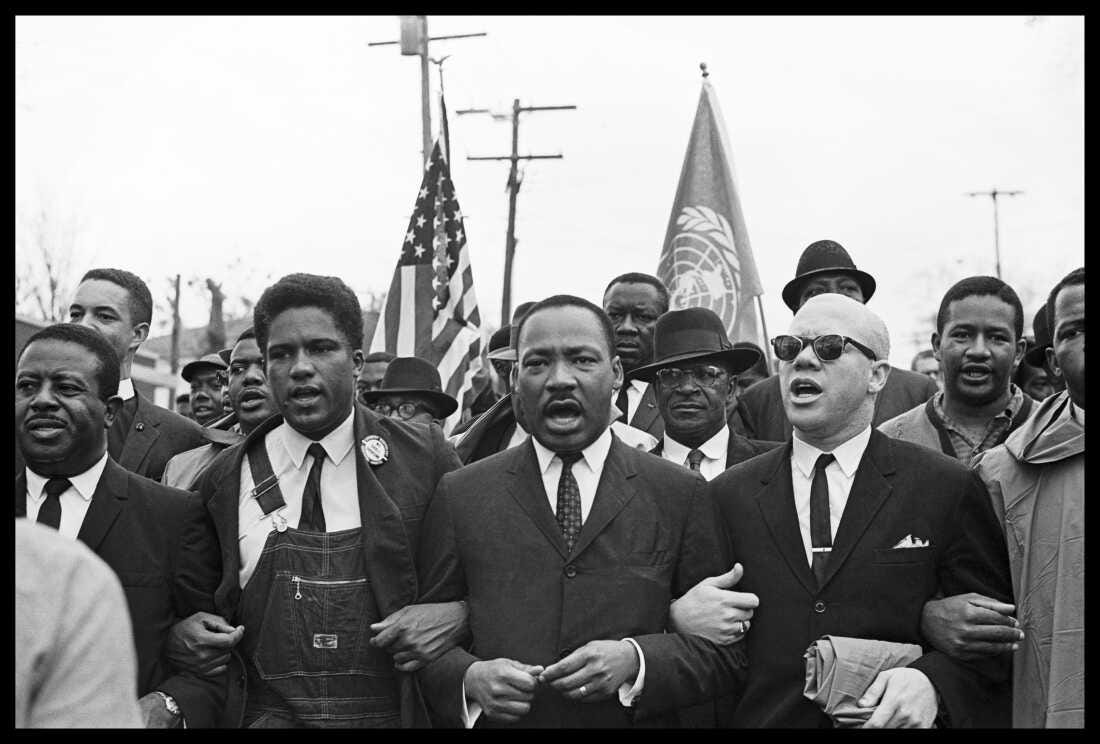
On August 6, 1965, five months after “Bloody Sunday,” when civil rights protesters were brutally attacked in Selma, Alabama, President Lyndon B. Johnson signed the legislation known as the Voting Rights Act, which guaranteed a voice for communities of color.
Until then, Republican-majority states had used all sorts of arguments to prevent Black and Brown people from voting and electing their representatives. The new law put provisions in place to prohibit this. One of them, Section 2, is the one the Supreme Court is now challenging.
Justice Elena Kagan, in her dissent, said the requirement to prove intentional discrimination is “an almost insurmountable barrier” for challenges to voting rights issues seeking to prove discrimination.
A dangerously timely ruling.
“We’re witnessing the evisceration of America’s greatest legislative landmark at the hands of a far-right Supreme Court,” said Democratic U.S. Rep. Ritchie Torres of New York.
Maria Teresa Kumar, president of Voto Latino, said the decision will allow for more aggressive “cracking and packing” of populations to dilute their votes, “not just in congressional districts but also in state legislatures, county commissions, school boards, and city councils.”
The decision comes at a time when Donald Trump’s administration is facing historically low approval ratings, when a handful of conservatives loyal to the administration are taking over the media, and when constitutional guarantees are at risk.