


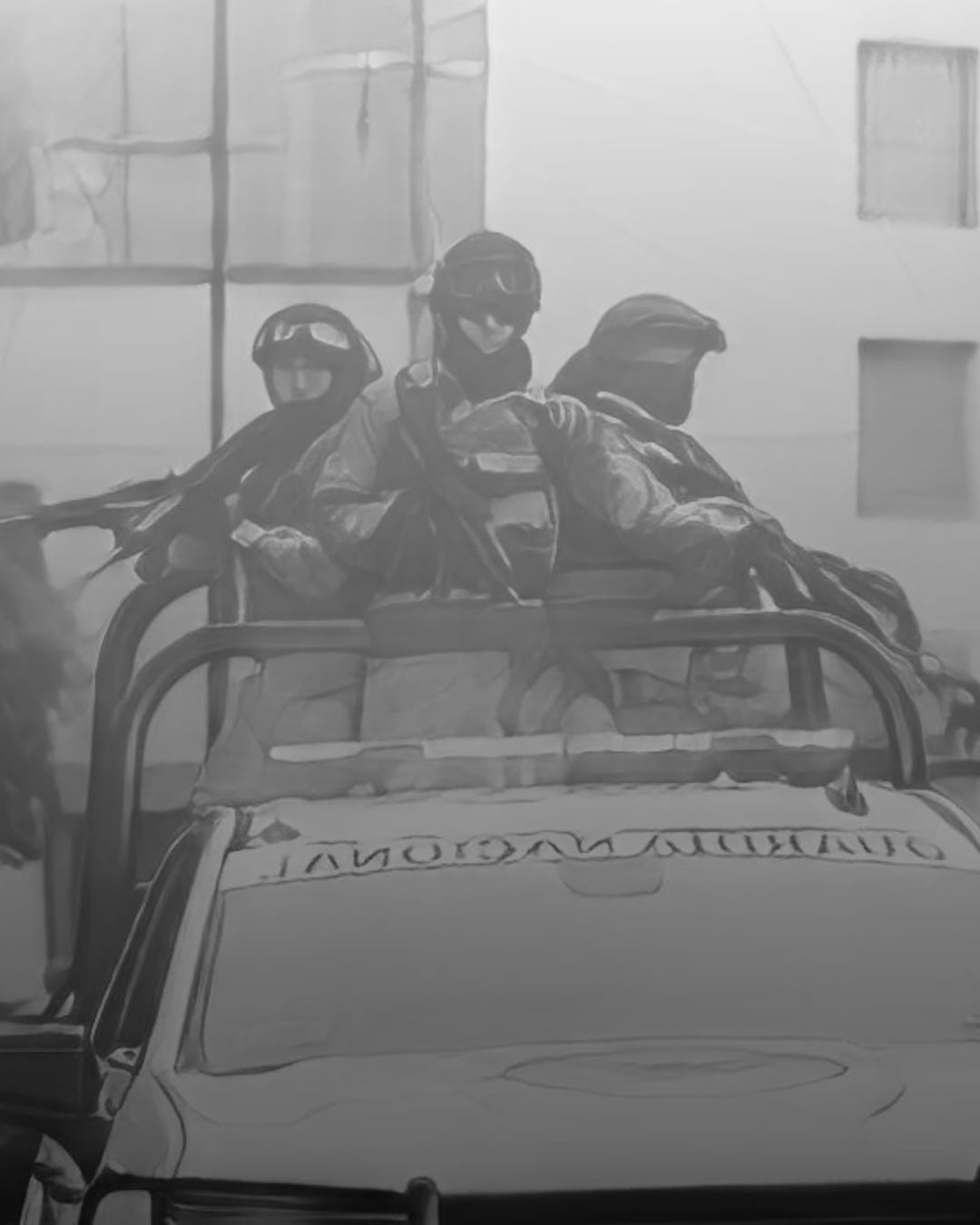
Cartels have wielded power in North America for decades. The rise of Mexican criminal enterprises has been violent and has even caught the attention of Hollywood. Cartel violence is a common theme in movies and television shows. There are even shows like “Narcos” that focus fully on the underbelly of Mexico.
Like everything else, the rise of cartel violence and the growth of these criminal organizations did not happen in a vacuum. There were forces at work that created the perfect storm for the rise of cartels. Namely, the United States. The history of the cartel’s rise is directly tied to the U.S. and demand for illicit products, failed legislation, and overreaching foreign policies. The death of El Mencho is reigniting conversations about how the U.S. has been foundational in creating and growing the cartels.
It all started before Prohibition


The Harrison Narcotics Tax Act of 1914 aimed to end the use of non-medicinal opioids in the U.S. This was the first time that smugglers in Mexico realized that demand in the U.S. could be a profitable, albeit illegal, business. Mexican producers rushed to fill the void and get opioids across the northern border.
These operations were admittedly small, but they started to develop unofficial smuggling paths. The law created a high-profit black market, and U.S. citizens are not ones to go without. This was the first example of demand in the U.S., building and fortifying criminal enterprises in Mexico.
The Prohibition Era accelerated the growth of organized crime in Mexico


On January 17, 1920, Prohibition started in the U.S. The 18th Amendment outlawed alcohol as an attempt to combat crime and moral indecency. Bars were closed, alcohol sales were stopped, and the country entered a government-sanctioned social experiment. The ban on alcohol had the opposite effect than legislators expected.
Instead of alcohol being removed from life in the U.S., alcohol consumption went underground. It created a criminal empire of bootleggers and speakeasies getting alcohol to the people who still wanted to drink. The demand for the forbidden elixir created bootlegging networks that crossed over the Mexican and Canadian borders to keep the liquor and beer flowing.
In Mexico, the Prohibition Era gave Mexican producers a level of demand for goods that formalized smuggling routes. The illegal trade was supported by U.S.-based alcohol brands who moved their distilleries and operations to Mexican border towns. This bypassed the Volstead Act by allowing them to produce “Mexican bourbon” since alcohol production was outlawed in the U.S. The new distilleries produced liquor to supply speakeasies, and that required smuggling it across the border.
The Gulf Cartel, Mexico’s oldest cartel, was founded at this time with the sole purpose of smuggling alcohol to the U.S. The large quantities of alcohol they were smuggling gave rise to the “Plaza” system. This system is deeply rooted in bribing political and military figures. These people accepted bribes to turn a blind eye to the movement of alcohol from Mexico into the U.S.
Prohibition lasted for 13 years. During that time, crime rose as organized criminal enterprises battled over bootlegging turf. This is the time in history when we saw people like Al Capone, Charles “Lucky” Luciano, Arthur “Dutch Schultz” Flegenheimer, and George “King of Bootleggers” Remus rise to power.
The end of Prohibition in the U.S. forced cartels to diversify

U.S. citizens celebrated the end of Prohibition after 13 long years. Finally, alcohol was back and the people were able to drink without fear of arrest or police raids. While the U.S. celebrated, the Mexican cartel had to diversify and shifted their primary focus to narcotics, prostitution, and gambling. At the same time, the U.S. pressured the Mexican government to pass its own prohibition law, fueling the growth of an underground criminal network.
By the 1940s, Mexican President Lázaro Cárdenas legalized drugs and started to treat addiction as a health issue. Again, the U.S. government applied pressure and enacted an embargo on medicinal products to Mexico. After just a few months, the law was repealed, criminalizing drugs again.
U.S. interference emboldened cartels


In 1969, President Richard Nixon started “Operation Intercept,” which caused tension and chaos between the two countries. The operation, which lasted a few months, focused on curbing the flow of drugs to the U.S. by almost completely shutting down the border. Small-scale criminal organizations started to join forces to create more sophisticated smuggling operations to bypass the new security measures at the border.
The Caribbean Crackdown in the 1980s was another attempt by the U.S. to stop drugs from entering the country. This was a part of the infamous War on Drugs, which was escalated by President Ronald Reagan. The U.S. focused on the drug smuggling trade in the Caribbean from Colombia to Florida. When those routes got shut down by U.S. authorities, Colombian cartels partnered with Mexican cartels, like the Guadalajara Cartel, to use their established routes to keep moving drugs. This lucrative partnership was a windfall for the Mexican cartels, further cementing their presence in Mexico.
The 2000s ushered in a new iteration of Mexican cartel violence


The U.S. helped to usher in two key components of cartel violence in the 2000s. The Kingpin Strategy, which was enacted by the U.S. to help combat the spread of cartel operations, didn’t stop the cartels. Rather, the aggressive approach focused on the kingpins resulted in cartels splintering into smaller groups. When this happened, the groups became more violent and started to fight over territory and control. The increase in active groups meant that regular cartel violence would become a reality for Mexican civilians.
The epidemic of gun violence and the ease of purchasing and manufacturing guns in the U.S. added to the violence. Numbers show that 70 to 80 percent of guns confiscated from cartels trace back to the U.S. They are being smuggled into Mexico using the same smuggling paths that cartels have used and fortified over the decades. More than a century after the Harrison Narcotics Tax Act of 1914, U.S. demand and the failed War on Drugs created a profitable black market, and the cartels took advantage.
International collaboration to combat crime and drug smuggling isn’t inherently a negative thing. However, historical context shows that the way the U.S. has tried to restrict alcohol and drugs hasn’t had the intended effect. Rather, the desire to end criminality in the U.S. around illicit goods only served to bolster organized crime in Mexico.